 How-to
Mail In BCM Repair Service: Fix Your Module Fast
Table of Contents
- Why a Mail-In BCM Repair Service Beats the Dealership
- Body Control Module Symptoms: Is Your BCM Really Failing?
- How to Remove a Body Control Module Safely
- Mail-In BCM Programming and What Happens on the Bench
- BCM Repair vs. Replacement: Which One Makes Sense?
- How to Vet a Mail In BCM Repair Service Before You Ship
- Frequently Asked Questions
Last Updated: October 9, 2026
Why a Mail-In BCM Repair Service Beats the Dealership
A mail in BCM repair service lets you ship your body control module to a specialist who repairs, programs, and returns it, instead of paying dealership labor rates and waiting days for a part swap.
The reason comes down to how dealerships are set up. Their technicians are trained to swap parts, not to open a module and repair the circuit board inside it.
Cost and Time: What You Actually Save
A mail-in repair skips the parts markup entirely. You pay a flat-rate repair fee and shipping, and you keep your original module.
Timelines work differently too. A dealership often needs to order the module before it can even schedule the work, which can stretch the job across a week or more. A repair service that runs bench testing in-house can often turn a module around in a day or two once it arrives.
Body Control Module Symptoms: Is Your BCM Really Failing?
Body control module symptoms rarely look like a single broken part. They look like a car that has developed a personality disorder, with unrelated systems failing at once.
A body control module (BCM) is the computer that manages your vehicle's comfort and convenience electronics, including power windows, locks, interior lighting, wipers, and often the anti-theft and immobilizer system. When it fails, the symptoms scatter across the whole vehicle.
Dashboard Warnings and Electrical Oddities
Watch for these signs:
- Multiple warning lights appearing at once, with no obvious shared cause
- Power windows, locks, or seats that work intermittently or stop entirely
- Interior lights, wipers, or turn signals behaving erratically
- A battery that drains overnight with no accessory left on
Any one of these alone might point elsewhere. Several together, especially across unrelated systems, point hard at the BCM.
When It's Not the BCM: Confirming the Diagnosis First
This is the step most owners skip, and it is the one that costs them money. A dead battery, a corroded ground strap, or a chafed wiring harness can produce symptoms that look exactly like a failing module.
Before you remove anything, have the vehicle scanned with a proper scan tool and read the diagnostic trouble codes. A qualified automotive technician can then confirm whether the fault traces to the module itself or to the wiring feeding it.
How to Remove a Body Control Module Safely
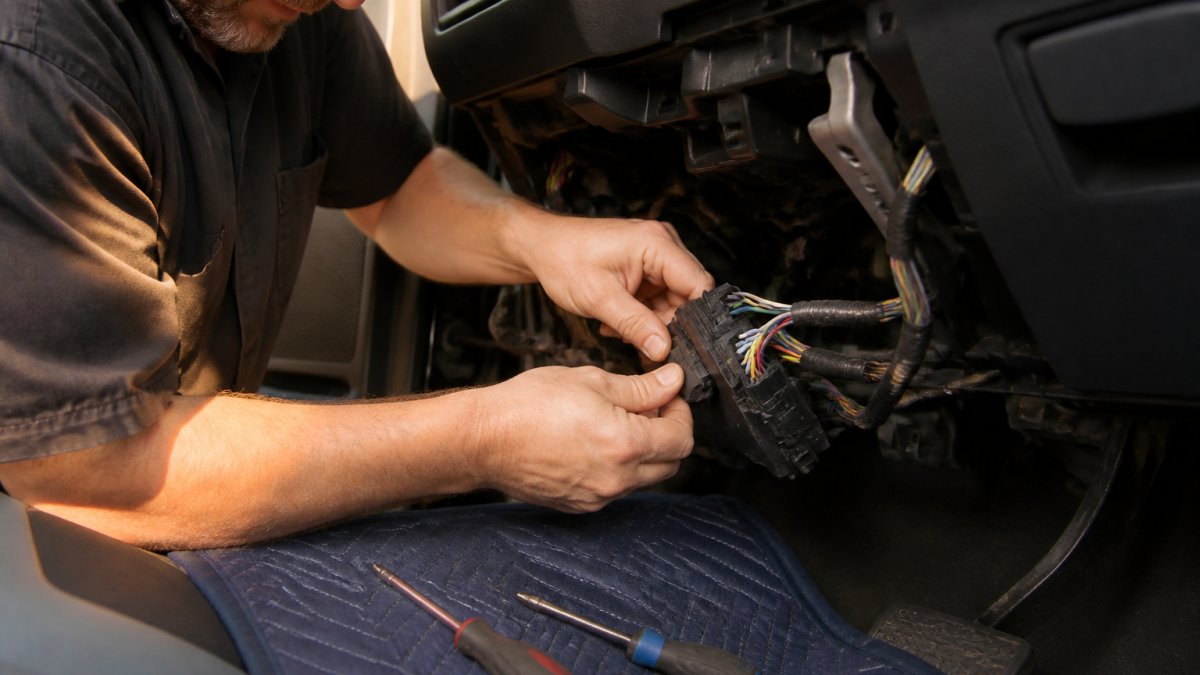
Removing a BCM is straightforward, but it demands care. The module is an electronic component, and static discharge or a forced connector can turn a repairable fault into a dead unit.
Tools and Prep Before You Touch Anything
Gather these first so you are not improvising mid-job:
- A memory saver or a note of your radio and clock settings, since disconnecting the battery will clear them
- An anti-static wrist strap or, at minimum, a habit of touching a bare metal chassis point before handling the module
- Trim removal tools or a plastic pry set, so you do not crack brittle interior panels
- A 10mm socket or the size your battery terminal uses, plus a small pick for releasing connector locks
- A phone or camera for reference photos
Work in a dry area. Static builds on carpet and synthetic clothing, and a single discharge can damage the very board you are trying to save.
Step-by-Step Removal
- Disconnect the negative battery cable first, then wait a few minutes before unplugging anything. On many vehicles the BCM stays powered briefly after key-off, and pulling a live connector can set codes or damage a driver circuit.
- Locate the module. Common locations are under the driver-side dash near the kick panel, behind the glovebox, beneath a front seat, or in the engine bay fuse box area on some trucks. If you are unsure, a factory service manual or a model-specific forum thread will show the exact spot.
- Remove the trim or panel covering the module using plastic pry tools. Keep the fasteners in your tray.
- Photograph every connector from a couple of angles before you unplug it. The reinstall depends on getting them back in the right order, and some connectors look identical.
- Release the connectors by their locking tabs. Never pull on the wires. If a tab is stubborn, use a small pick to lift it rather than forcing the plug.
- Remove the mounting screws or bracket and slide the module out. Note its orientation so it goes back the same way.
Packing and Shipping Your Module
Packaging is where a repaired module gets ruined on the way home, so do it properly:
- Wrap the module in anti-static material first, then at least two inches of bubble wrap on every side so it cannot shift inside the box.
- Use a rigid corrugated box, not a padded envelope. A padded envelope offers almost no crush protection.
- Fill empty space with packing paper or air pillows so the module cannot rattle.
- Include a note with your contact details, the vehicle's year, make, model, and VIN, the part number off the module label, and a description of the symptoms.
- Ship with tracking and keep the receipt. Signature confirmation is worth the small added cost on a module that is hard to replace.
What to Expect After You Ship
A reputable service will confirm receipt, run bench testing, and contact you if the diagnosis differs from what you described. Ask up front whether they will call before doing non-warranty work, and whether return shipping is tracked.
Mail-In BCM Programming and What Happens on the Bench
Mail-in BCM programming ensures the module is not just repaired, it is restored to match your specific vehicle.
On the bench, the technician first confirms the fault with bench testing, then repairs the failed component. After repair, the module is programmed with your vehicle identification number so it communicates correctly with the rest of the vehicle electronics, including the immobilizer and anti-theft system.
BCM Repair vs. Replacement: Which One Makes Sense?
Repairing a module keeps your original programming intact and avoids the cost of a new part.
Identify Your Module Before You Decide
You cannot compare repair and replacement until you know exactly what you have. Find the module and read the label. You are looking for:
- The part number, which is the long alphanumeric string on the label
- The hardware and software revision, often a shorter code near the part number
- The connector count and pin layout, which must match any replacement
Two modules can share a part number and still not interchange if the software revision or connector configuration differs. This is why a used module pulled from a similar vehicle often will not work without programming, and sometimes will not work at all.
The Decision Framework
| Situation | Better Option | Why |
|---|---|---|
| Module has a repairable fault (cold solder joint, failed relay, blown driver) | Repair | Keeps original VIN programming and keys; usually the lowest total cost |
| Module is physically destroyed (cracked board, burn-through, water intrusion) | Replacement | Board damage beyond repair; a replacement still needs VIN programming and key matching |
| Fault is in the wiring, ground, or a shorted load | Neither | Fix the harness or the load first, or the new or repaired module will fail again |
| You need the vehicle back fast | Repair | Bench turnaround is often 24 to 48 hours once the module arrives |
| The module is discontinued or scarce | Repair | Repair may be the only realistic path to keeping the vehicle on the road |
| The vehicle is under a known recall or TSB for the module | Check first | A dealer may cover the fix; confirm before you pay anyone |
The Hidden Costs of Replacement
A replacement module is rarely just the part. Budget for:
- VIN programming, which most replacement modules require before the vehicle will start
- Key and immobilizer matching, because a new module typically does not know your existing keys
- Towing or a no-start condition if the vehicle is immobile while you wait
- A second failure if the root cause was a shorted load or bad ground that damaged the original module
Repair sidesteps most of these because your original module keeps its programming and your keys keep working.
When Replacement Is the Right Call
Replacement makes sense when the board itself is cracked, burned, or water-damaged beyond recovery, or when the module is a known weak design that fails repeatedly. In those cases, a replacement module still needs VIN programming and key matching before the vehicle will start, so factor that into the total.
How to Vet a Mail In BCM Repair Service Before You Ship
Vetting a provider takes ten minutes and protects your module. Ask direct questions before you box anything up.
- Do they program to your VIN, or just repair the board?
- What is the stated turnaround time, and is it guaranteed?
- What warranty covers the repair, and what does it exclude?
- Do they return the original module, or substitute a different unit?
- Is return shipping included, and is the price flat-rate or open-ended?
A provider that answers these clearly, in writing, is one worth your shipping label.
A failed BCM can leave your vehicle undrivable and your keys useless. Dealerkeys repairs, programs, and clones BCM, ECU, and immobilizer modules through a streamlined mail-in process, backed by over 26 years of experience and OEM-level tools.
Frequently Asked Questions
How does a mail-in BCM repair service work?
You remove the body control module from your vehicle, pack it securely, and ship it to the repair facility. A technician bench-tests the unit, identifies the fault, repairs the failed components, and programs the module to your VIN. The repaired BCM is then shipped back to you, ready to install. Most services include return shipping and a warranty on the repair. The process avoids the dealership parts counter and keeps your original module matched to the vehicle.
Does a repaired BCM need to be programmed to the vehicle?
Yes. A repaired BCM must be programmed to match your vehicle's VIN and configuration. This is called VIN programming or cloning, and it ensures the module communicates correctly with the ECU, immobilizer, and other systems. If you skip programming, the vehicle may not start or may throw fault codes. A reputable mail-in BCM programming service handles this step on the bench before returning the module, so it arrives ready to install.
How long does mail-in BCM repair take?
Turnaround time varies by provider and module condition, but many services offer 24-hour to two-day turnaround once the module arrives. Shipping time both ways adds to the total. Ask the provider for their current lead time before you ship, and confirm whether they provide tracking and status updates. If you need the vehicle back quickly, choose a service that prioritizes fast bench testing and return shipping.
Can I drive my vehicle with a faulty BCM?
It depends on the failure. Some BCM faults only affect convenience features like power windows or interior lights, and the vehicle may still drive. Other failures can disable the anti-theft system, prevent the engine from starting, or cause intermittent electrical problems that affect safety systems. If the BCM controls your immobilizer or key module, do not drive the vehicle until it is repaired. Get a proper fault diagnosis before deciding.