 How-to
Key Fob Programming for Dealerships: 2026 Guide
Table of Contents
- Key Fob Programming for Dealerships: What Actually Happens in the Service Bay
- Dealership Key Fob Programming Cost: What Drives the Bill
- Key Fob Programming Tools: What Dealers Use and What You Can Buy
- Programming a Replacement Key Fob: Step-by-Step for Common Vehicles
- Key Fob Programming Without a Dealership: When It Works and When It Doesn't
- All Keys Lost: The Security Scenario That Forces a Dealer or Locksmith Visit
- Preparing for Your Appointment: Documents, VIN, and Proof of Ownership
- Conclusion
- Frequently Asked Questions
Last Updated: October 7, 2026
Key Fob Programming for Dealerships: What Actually Happens in the Service Bay
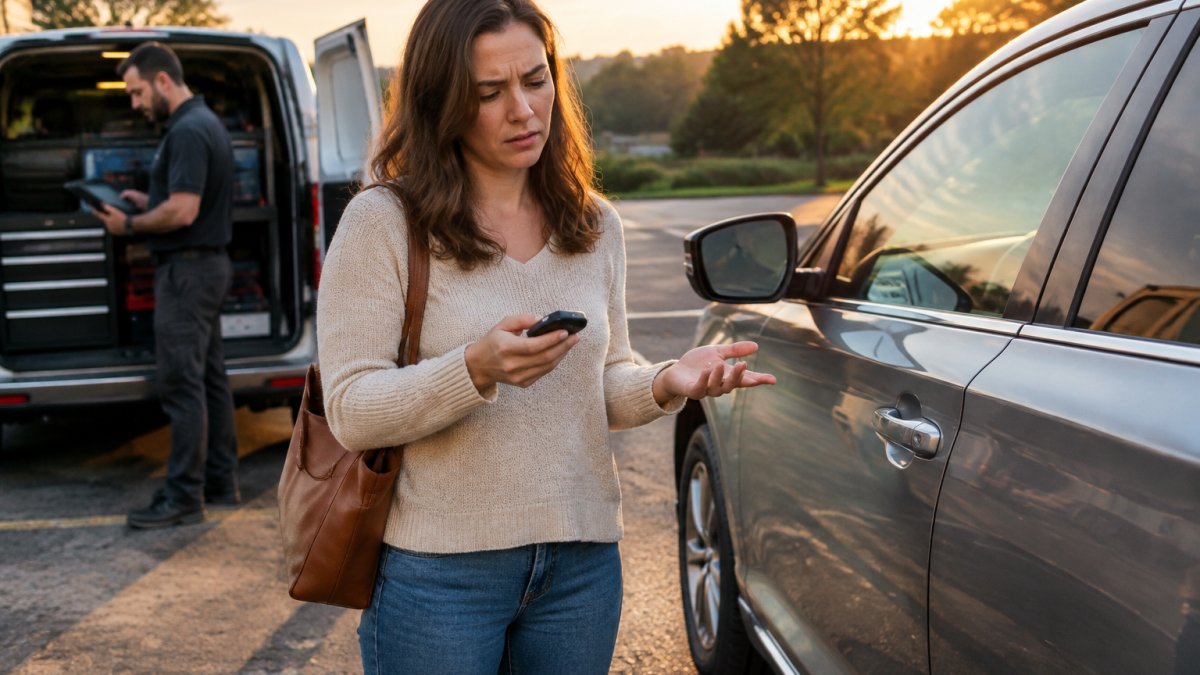
Key fob programming for dealerships pairs a new or replacement remote with a vehicle's immobilizer and body control module using manufacturer software.
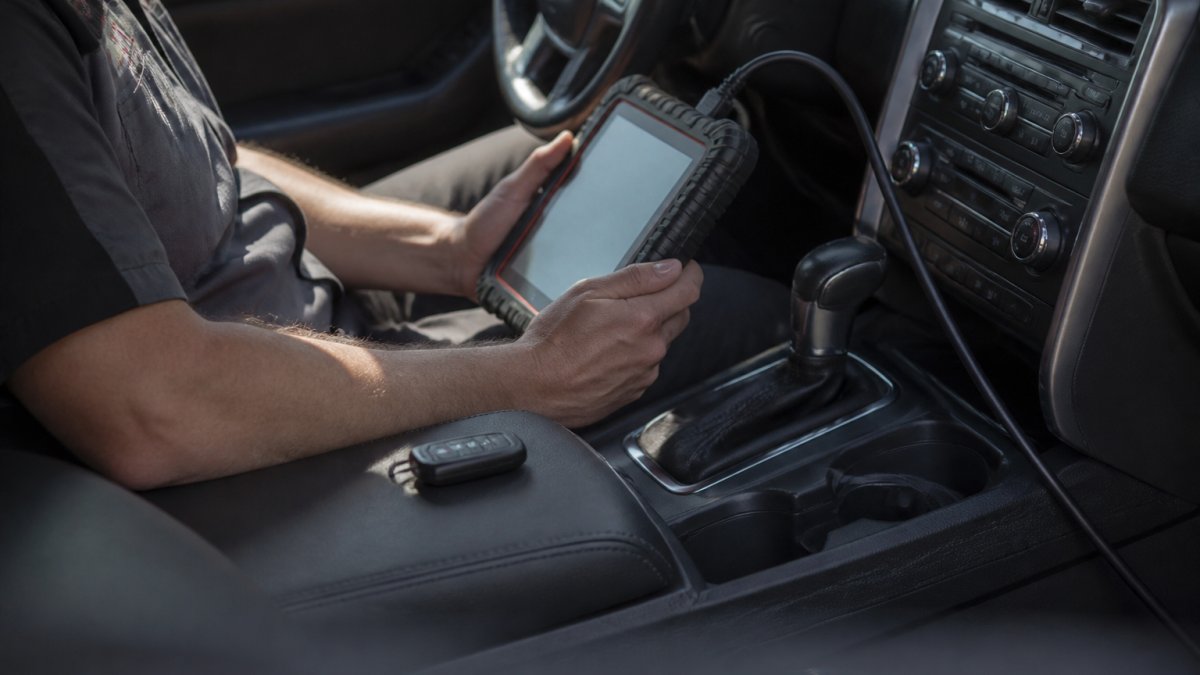
A technician plugs a diagnostic tablet into your car, pulls the vehicle identification number, and writes new security codes to the fob.
Modern vehicles use a transponder key or smart key that talks to an immobilizer, an anti-theft computer that checks whether the key is authorized.
Why Most Modern Fobs Can't Be Cloned at a Hardware Store
A hardware store can cut the blade but usually can't program the chip, the equipment needed to write security codes is manufacturer-specific and rarely stocked. Three things block a simple copy: the fob's transponder chip is tied to your VIN, the immobilizer requires a coded handshake before starting, and newer models push a software authorization through a dealer account.
Dealership Key Fob Programming Cost: What Drives the Bill
Dealership key fob programming cost comes down to three line items: the fob itself, the labor to program it, and any security or diagnostic fees. It swings widely by make, model, and key type.
Labor Rates, Programming Fees, and Parts Markup
A dealership bill typically breaks into these parts:
| Line Item | What It Covers | What Drives It Up |
|---|---|---|
| Replacement fob | The physical remote and chip | Smart keys cost more than basic remotes; proximity fobs with passive entry cost more than push-button-only fobs |
| Programming labor | Technician time on the diagnostic tool | Booked in half-hour or hourly blocks; some shops bill a minimum even if the write takes minutes |
| Security fee | Software authorization from the maker | Some brands charge per programming event; others bundle it into a subscription the dealer already pays |
| Key cutting | Cutting the emergency blade | Laser-cut and sidewinder blades take longer and need a dedicated cutter |
| Diagnostic charge | Scanning for stored fault codes | Added if the car won't communicate or the immobilizer is in a fault state |
| All-keys-lost surcharge | Extra steps to reset the immobilizer and erase old key data | Requires security access, sometimes a wait on a manufacturer server |
Two variables move the total most: whether you have a working key, and whether the car is push-button or turn-key. A push-button smart key costs more because the fob carries more electronics and the pairing touches more modules.
The Three Pricing Tracks You'll See at a Dealership
Which pricing track you're on explains most of the swing:
- Customer-pay retail. You walked in with your own car and a dead or lost fob. The highest track, carrying full parts markup and full labor rate.
- Warranty. A fob that failed under warranty is billed back to the maker at a set labor time. The customer often pays nothing, but the dealer still gets reimbursed.
- Internal / used-car lot. When the dealership's own used-car department needs a key to move a unit to the front line, the work is billed internally at a reduced rate, the track most relevant to lot managers, where volume and turnaround matter more than margin.
What Actually Changes the Ticket
Factors that push the number up or down:
- Key type. A basic transponder key with a separate remote is cheapest. An integrated switchblade or smart key costs more. A fob with passive entry and a proximity chip costs the most.
- Working key on hand. One authorized key means a spare-key add. None means an all-keys-lost reset, which adds labor and often a security wait.
- Module communication. If the body control module or immobilizer won't respond to the scan tool, the technician must diagnose before programming, billable time.
How to Get an Accurate Quote
A real quote needs four pieces of information: the VIN, the current key count, whether the car is push-button or turn-key, and whether any keys still work.
For a dealership lot, you're pricing a workflow, not one key. A lot that buys keys in batches, keeps a per-vehicle key log, and schedules programming in blocks pays less per unit than one that calls a mobile tech for every single-key unit.
Where the Money Doesn't Go
A common misconception is that most of the bill is the fob. On many late-model smart keys, programming labor and security authorization together can rival or exceed the fob's cost. That's why buying a fob online rarely saves what customers expect, the dealer still charges labor and security, and some won't program customer-supplied parts because they can't warranty the outcome.
Key Fob Programming Tools: What Dealers Use and What You Can Buy
Dealer-side tools do three jobs: read and clear immobilizer codes, write new key data to the module, and pull security authorization from the maker's server.
Consumer handhelds handle some older vehicles and a few common models, but can't reach manufacturer servers, so they can't authorize a brand-new key on most late-model cars.
Programming a Replacement Key Fob: Step-by-Step for Common Vehicles
Programming a replacement key fob follows a set sequence on most vehicles. The button presses change by make and model, but the shape of the job stays the same:
- Confirm the key type and pull the VIN
- Connect the diagnostic tool to the OBD-II port
- Select the correct make, model, and year
- Erase old key data if you're replacing a lost fob
- Write the new fob to the immobilizer
- Test every remote function: lock, unlock, trunk, panic
- Confirm the engine starts and the security light stays off
The last two steps are the ones people skip. A fob that locks the doors but won't start the engine isn't finished.
Onboard Programming: When the Owner's Manual Has the Answer
Some vehicles let you program a spare fob yourself. This is onboard programming, and it lives in your owner's manual. It usually works only when you already have one working key. The common sequence:
- Sit in the driver's seat with doors closed
- Turn the ignition on and off in a set pattern
- Press a button on the working fob, then the new one
If your manual has no such section, the car needs a diagnostic tool.
Key Fob Programming Without a Dealership: When It Works and When It Doesn't
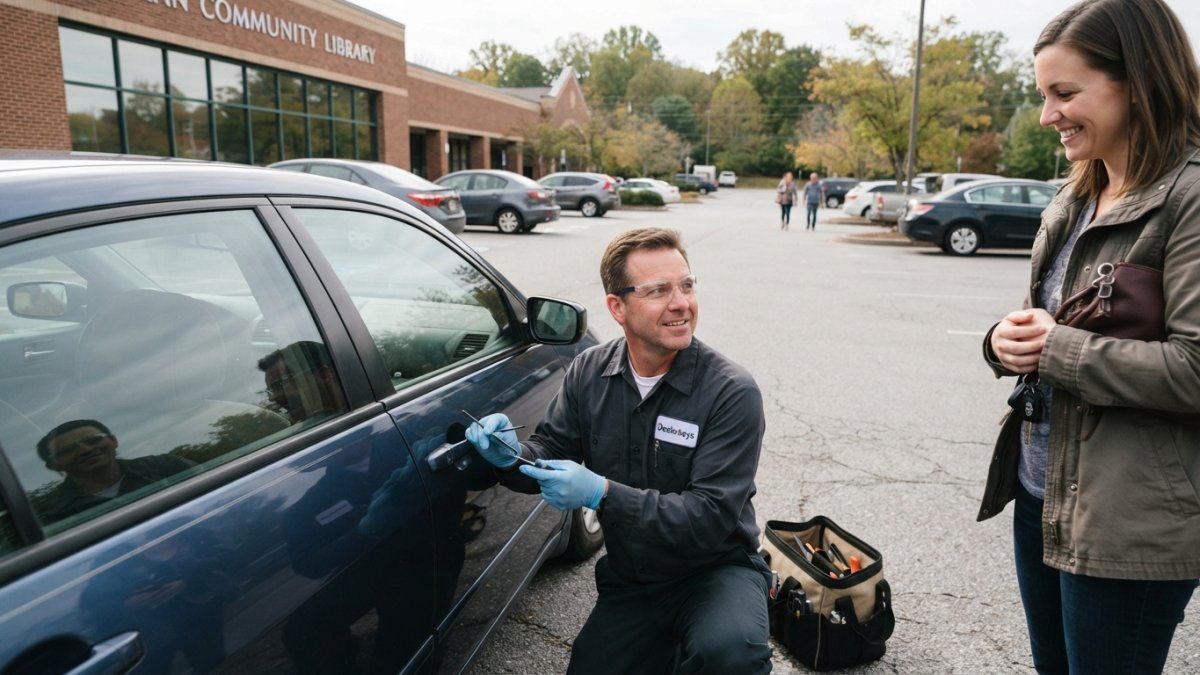
Key fob programming without a dealership works in more cases than people expect. An automotive locksmith or mobile programmer with OEM-level tools can do the same job on site.
DIY programming works when:
- You have at least one working key
- Your owner's manual lists an onboard procedure
- The car is older and uses a simpler immobilizer
You need a professional when:
- All keys are lost
- The car is push-button start with a smart key
- The immobilizer has stored fault codes
The difference between a dealership and a mobile programmer usually comes down to convenience and price, not capability. Both use similar diagnostic equipment.
All Keys Lost: The Security Scenario That Forces a Dealer or Locksmith Visit
All keys lost is the one case where DIY is off the table. When no authorized key exists, the car has nothing to teach the new fob from, so the immobilizer has to be reset through a diagnostic tool with security access.
The process typically runs:
- Verify ownership with your documents
- Gain non-destructive entry to the vehicle
- Pull the VIN and confirm the key type
- Reset the immobilizer and clear old key data
- Program a new key or fob
- Test start and all remote functions
A mobile locksmith can often finish this on site. A dealership may need the car towed in first, which adds time and cost.
Preparing for Your Appointment: Documents, VIN, and Proof of Ownership
Preparation cuts appointment time in half and determines whether the job can be done at all. A dealership or mobile programmer must confirm you're authorized to have a key made, and missing paperwork is the most common reason a key appointment stalls.
The Document Checklist
Have these ready before the technician arrives:
- Vehicle title or registration in your name
- Photo ID matching the name on the document
- The VIN, visible on the dashboard or door jamb
If the vehicle is leased, financed, or owned by a business, the rules change: a lease company or lienholder may need to authorize the key, and a company vehicle may need a letter on letterhead. Call ahead, requirements vary by state and shop.
Why Each Item Matters
- Title or registration. Ownership proof establishing your right to a key for this VIN. Without it, a reputable shop will refuse the job.
- Photo ID. Must match the name on the ownership document. A mismatch, a spouse's name, a business name, a recently changed last name, is a common snag.
- VIN. The technician uses it to pull the correct key type, immobilizer configuration, and programming procedure. A wrong VIN means a wrong part and a failed attempt.
What the Dealership Checks Before Programming
A dealership service department runs a short verification sequence before it touches the vehicle:
- Confirm ownership documents match the person requesting the key.
- Pull the VIN and confirm the key type and part number for that trim.
- Check for open recalls or warranty coverage affecting the key system.
- Scan for stored immobilizer or body control module fault codes.
- Confirm whether a working key exists, which determines the programming path.
- Quote based on the actual key type, not a generic estimate.
That's why a dealership can't quote accurately over the phone without the VIN, and why a walk-in with no paperwork gets turned away.
For Dealership Lots: Build a Key Log
For a dealership lot, keep a simple log per vehicle: VIN, key count, fob status, and whether it's push-button or turn-key. It saves a scan on every car and lets you batch programming work instead of calling a mobile tech one unit at a time. Lot-specific practices that pay off:
- Photograph the VIN plate and the key count when a unit is acquired.
- Note the key type (transponder, switchblade, smart key) at intake.
- Flag any unit that arrives with a single key so it can be scheduled for a spare before it hits the front line.
Common Reasons an Appointment Gets Delayed
- Ownership document is in a spouse's or business's name and no authorization letter is present.
- The VIN on the paperwork doesn't match the VIN on the vehicle.
- The customer brought a fob bought online that doesn't match the vehicle's frequency or part number.
Conclusion
Key fob programming is a security job, not a hardware job. The blade is the easy part; the immobilizer handshake decides whether your car starts.
If you're stuck with a dead fob, a lost key, or a lot full of cars that won't start, Dealerkeys can help. We replace keys, clone modules, and offer a No Start Guide for vehicles that won't crank. Our mobile dispatch runs seven days a week across East Tennessee.
Call Dealerkeys for dispatch and get your vehicle lot-ready or back on the road.
Frequently Asked Questions
Can a dealership program a key fob without the original key?
Yes, in most cases. When all keys are lost, the technician resets the immobilizer and programs a new fob from scratch. This requires proof of ownership and a diagnostic tool with security access.
How long does key fob programming take at a dealership?
Programming itself often takes under an hour once the vehicle is in the bay. The total visit runs longer because of check-in, paperwork, and wait time. A mobile programmer can often finish on site in the same window.
Is it cheaper to program a key fob at a locksmith or a dealership?
It depends on the vehicle and the situation. A mobile locksmith avoids towing. A dealership may be the only option for certain late-model smart keys. Get a quote for your specific VIN before deciding.
Why won't my newly programmed key fob start the car?
A fob that locks the doors but won't start usually means the immobilizer didn't accept the key data, a wrong part number, an incomplete programming step, or a body control module fault. A diagnostic scan will show which.
Do I need a working key to program a spare fob?
Yes, for onboard programming. The do-it-yourself method in your owner's manual needs one authorized key in hand to teach the car the new one. With no working key, you need a professional tool.
Frequently Asked Questions
Can a dealership reprogram a key fob?
Yes. Dealerships use OEM-level diagnostic software to pair a new or replacement fob to your vehicle's immobilizer and body control module. The process requires the VIN, proof of ownership, and sometimes a security code from the manufacturer. Most dealerships can program a fob in under an hour once the correct part is in stock, though some makes require an online security authorization that adds time.
Can you program a key fob without going to the dealership?
For many vehicles built before roughly 2015, onboard programming through the owner's manual works: you cycle the ignition, press lock or unlock on the fob, and the vehicle learns the new remote. Newer vehicles with push-button start and rolling-code immobilizers usually need a professional programming tool or dealer software. An automotive locksmith with OEM-level equipment can handle most of these without a dealer visit.
How much does dealership key fob programming cost?
Dealership key fob programming cost depends on the make and model, whether you need a new fob or just programming, and the shop's labor rate. Expect the total to include the fob itself, a programming fee, and labor. Luxury and European brands cost more because the fob hardware is pricier and the security authorization is more involved. Ask for an itemized quote before you commit.
What information does a dealership need to program a key fob?
Bring your vehicle identification number, a government-issued ID matching the registration, and proof of ownership such as a title or current registration. If you have a working key, bring it. For all-keys-lost situations, some dealers require additional security verification. Having these documents ready before your appointment prevents delays and confirms you are authorized to program a key for that vehicle.