 how-to
How to Unlock a Car Door With a Dead Fob: 2026 Guide
Table of Contents
Check out our emergency open/start page
- Table of Contents
- Find the Hidden Mechanical Key Inside Your Fob
- Remove the Keyhole Cover to Access the Lock Cylinder
- How to Unlock a Car Door With a Dead Fob When There Is No Keyhole
- How to Start a Car With a Dead Key Fob
- Key Fob Battery Replacement Cost and Fastest Way to Replace Car Keys
- Tools You Need for Emergency Entry (and What Not to Use)
- Frequently Asked Questions
Last Updated: September 30, 2026
Find the Hidden Mechanical Key Inside Your Fob
A dead fob does not have to mean a dead end. Every key fob with a hidden mechanical key holds a backup blade, and finding it takes seconds. This guide from Dealerkeys covers how to unlock a car door with a dead fob, step by step, plus what to do when the fob is truly dead and the door has no keyhole.
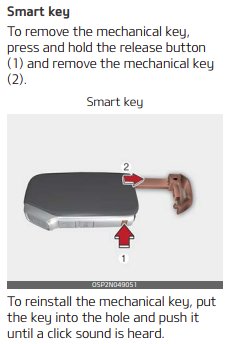
Step-by-step diagram showing how to release the mechanical key from a dead fob using the side button
Where the Key Blade Release Button Is Located
The key blade release button is a small sliding tab or push button on the edge or back of the fob housing. Press or slide it, then pull the blade out.
On most fobs, you will find it in one of three spots:
- A small sliding tab on the top edge
- A push button on the back panel
- A release switch under a small cover
How to Remove the Physical Key Blade Safely
Slide the release tab or push the release button and pull the key blade straight out. Do not force it.
Remove the Keyhole Cover to Access the Lock Cylinder
A keyhole cover hides the lock cylinder on many vehicles, a small plastic cap painted to match your door, sitting next to the door handle.
Here is how to get it off:
- Look behind or under the door handle for a small slot.
- Insert the tip of the physical key blade into the slot.
- Gently pry the cover outward. It should pop off with light pressure.
- Set the cover aside where you will not lose it.
How to Unlock a Car Door With a Dead Fob When There Is No Keyhole
Some cars hide the lock cylinder entirely behind a smooth handle with no visible slot. On these models, the cover pops off with a small pry tool, and the keyhole sits underneath. If your handle has no keyhole and no cover, you need a different approach.
Where the Hidden Keyhole Lives, by Vehicle Type
The location depends on how the manufacturer designed the door handle. Here is how the major systems break down:
- Slide-out keyhole behind a painted cap: Common on many domestic and Japanese sedans. The cap is color-matched to the door and sits at the rear edge of the handle. Insert the key blade tip into the notch and pry outward.
- Keyhole hidden under the handle pull: Some European models tuck the cylinder behind the pull handle itself. Pull the handle out and look for a small slot on the underside.
- Keyhole on the driver's door pillar: A few models move the cylinder to the B-pillar between the front and rear doors. Look for a small round cap.
- No door keyhole at all: On these, the only mechanical lock is on the rear hatch or trunk. This is common on minivans and some SUVs.
Emergency Access Through the Rear Hatch or Trunk
Many vehicles put a mechanical lock on the rear hatch or trunk when the doors have none. The keyhole is often hidden under the trim panel or behind the license plate light.
Silencing the Anti-Theft Alarm After Entry
The alarm will likely sound the moment you open the door with the mechanical key. Do not panic.
Here is how to quiet it:
- Start the engine using the emergency start method below. On most push-to-start models, the vehicle reads the transponder chip in the fob and shuts the alarm off.
- Press the unlock button on the fob, even if it seems dead. A weak battery can still transmit a short burst.
- Insert the key in the ignition and turn it to the run position on models with a traditional ignition.
When to Stop and Call a Professional
If the key blade is missing, the lock cylinder is frozen, or the fob is damaged beyond use, stop. Forcing a frozen cylinder can snap the blade inside the lock, turning a simple entry into a lock replacement. A mobile locksmith carries the tools for non-destructive entry and can cut a replacement key on site.
How to Start a Car With a Dead Key Fob
A dead fob can still start the car on most push-to-start models. The system reads the transponder chip through a backup sensor, even when the battery is dead. Hold the fob against the start button and press it, the sensor picks up the chip and the engine starts.
Using the Emergency Start Slot or Push-to-Start Override
Look for a marked spot near the start button or in the center console, labeled with a key symbol or a small indentation.
- Press the brake pedal.
- Hold the fob directly against the start button.
- Push the button while holding the fob in place.
Key Fob Battery Replacement Cost and Fastest Way to Replace Car Keys
A key fob battery replacement cost is usually low, and you can often do it yourself in minutes. The battery is a common coin cell sold at most stores; read the number printed on the old battery before you buy a replacement.
How to Replace the Fob Battery
Here is the fast version:
- Pry the fob casing open with a flathead screwdriver or a plastic pry tool. Work around the seam, not at one point.
- Note the battery size printed on the old cell. Common sizes include CR2032, CR2025, and CR1632.
- Swap in the new battery, positive side up. The flat side with the plus sign faces you on most fobs.
- Snap the fob housing back together and test it.
If the fob still will not work after a fresh battery, the problem is not the battery, it may be a failed transponder chip, a broken casing, or a synchronization issue.
Why Fob Batteries Fail in Cold Weather
Coin-cell batteries rely on a chemical reaction that slows as the temperature drops. A battery that reads fine at room temperature can lose most of its usable voltage on a cold morning, which is why so many fobs "die" in a parking lot in January and work again once you warm them up.
A few practical habits help:
- Warm the fob in your hand or against your body for a minute before pressing the button.
- Keep a spare coin cell in the glove box. Cold slows it too, but a fresh cell has more reserve to give.
- Replace the battery at the first sign of weak range, before winter, rather than waiting for a failure.
- Store the spare fob indoors, not in a cold garage or glove box, if you have one.
Cost and Trade-Offs
A coin-cell battery is one of the cheapest parts on the car, typically a few dollars at a grocery store, pharmacy, or big-box retailer. The trade-off is your time and the small risk of cracking the fob casing.
The Fastest Way to Replace Car Keys
The fastest way to replace car keys is to have a mobile locksmith cut and program a new one on site. At Dealerkeys, we cut and program keys and fobs on location, so you skip the dealership trip. For module-level problems like a failed immobilizer or BCM, our mail-in repair service restores the unit to factory specs.
Tools You Need for Emergency Entry (and What Not to Use)
You need very little: the physical key blade from your fob, and a small flathead screwdriver or plastic pry tool for the keyhole cover.
What not to use:
- A coat hanger or slim jim on modern doors (you will damage the window regulator)
- A butter knife or house key on the lock cylinder
- Force on any plastic cover
Frequently Asked Questions
How do I unlock my car door if the key fob is dead?
Most key fobs hide a physical key blade inside. Press the release button on the fob housing, slide out the key blade, then insert it into the lock cylinder behind the keyhole cover on your door handle. If your car has no visible keyhole, check for a hidden cover you can pry off with a flathead screwdriver. Some vehicles also allow entry through the rear hatch using the mechanical key. If the key blade is missing or the lock cylinder is frozen, call a mobile locksmith for non-destructive entry.
Can I still start my car with a dead key fob?
Yes, in most vehicles. If your car has push-to-start, hold the dead fob against the ignition button or place it in the emergency start slot (often inside the center console or near the cup holder) and press the brake while pushing the start button. The transponder chip inside the fob still communicates with the immobilizer system even when the battery is dead. If the fob is completely unresponsive, you may need a replacement or reprogramming from a locksmith.
How much does key fob battery replacement cost?
A replacement battery for most key fobs is typically inexpensive at retail stores. The battery type is usually a CR2032 or CR2025 coin cell, listed in your vehicle manual. Replacing it yourself takes about five minutes with a small flathead screwdriver. If the fob still does not work after a new battery, the issue may be the fob synchronization or a failed transponder chip. For current pricing on battery replacement services, please contact us directly.
What should I do if my car door is deadlocked and the fob is dead?
Deadlocked doors cannot be opened from inside or outside with the interior handle. Use the physical key blade in the exterior lock cylinder to override the deadlock. If your vehicle has no exterior keyhole, the rear hatch or trunk may still have a mechanical release. On some models, the emergency entry procedure involves prying off a small cap on the door handle. If none of these work, a professional locksmith with OEM-level tools can open the door without damaging the window or weather stripping.