 how-to
How to Program a Lost Key Fob: 2026 Step-by-Step Guide
Table of Contents
- Can You Program a Lost Key Fob Yourself?
- How to Program a Lost Key Fob: Step-by-Step Instructions
- Programming Instructions for 2008 Ford Focus Remote Fob
- OBD2 Key Programmer Tool: What It Does and When You Need One
- Key Fob Replacement Without the Original: Your Options
- Car Key Fob Programming Cost: DIY vs. Professional Service
- Common Mistakes and Troubleshooting Tips
- When to Call a Professional Locksmith
- Frequently Asked Questions
Last Updated: September 30, 2026
Can You Program a Lost Key Fob Yourself?
Yes, you can often program a lost key fob yourself, but success depends on your vehicle's age and security system. This guide from Dealerkeys, drawing on 26 years of locksmith experience, explains exactly when DIY works and when it fails.
Older cars with basic keyless entry remotes are the easiest. You can pair a new fob in minutes using a simple ignition sequence. Newer vehicles with an immobilizer system are a different story.
That chip must match your car's security code. Without a working key, most drivers can't do this at home.
Here's the key distinction most guides skip: pairing a remote is not the same as programming a chip. One is a five-minute job. The other needs a diagnostic tool or a dealer.
Onboard Programming vs. Diagnostic Tools
Onboard programming is a built-in procedure your car runs itself. You trigger it with a set sequence of ignition turns, button presses, or door cycles. No tools required.
This works on many vehicles built before the mid-2000s.
When DIY Won't Work: Immobilizer and All-Keys-Lost Scenarios
An immobilizer system stops the engine from starting unless it reads a matched chip. This is why a copied key blade alone won't start your car.
Two situations block DIY entirely:
- You lost every key. The system needs an existing key to authorize a new one.
- Your car uses a rolling security code. Only a dealer-level tool can sync it.
How to Program a Lost Key Fob: Step-by-Step Instructions
The steps below cover the most common onboard method. Your exact sequence may differ, so always check your manual first.
Step 1: Identify Your Key Type and Check the Owner's Manual
Open your vehicle owner's manual to the "remote" or "key" section. Look for a programming sequence. If it's listed, your car supports onboard programming.
Then identify your key type:
- Transponder key: has a chip but no buttons
- Keyless entry remote: has buttons to lock and unlock
- Smart key / push-to-start fob: starts the car without a physical turn
Step 2: Gather Your Tools and Enter Programming Mode
For onboard programming, you need:
- Your new replacement remote or aftermarket fob
- All existing working keys
- A fresh key fob battery
- Your owner's manual
Close all doors. Some cars require the driver's door to stay open during the sequence. Turn the ignition to "ON" without starting the engine.
Step 3: Complete the Ignition Cycle and Test the Fob
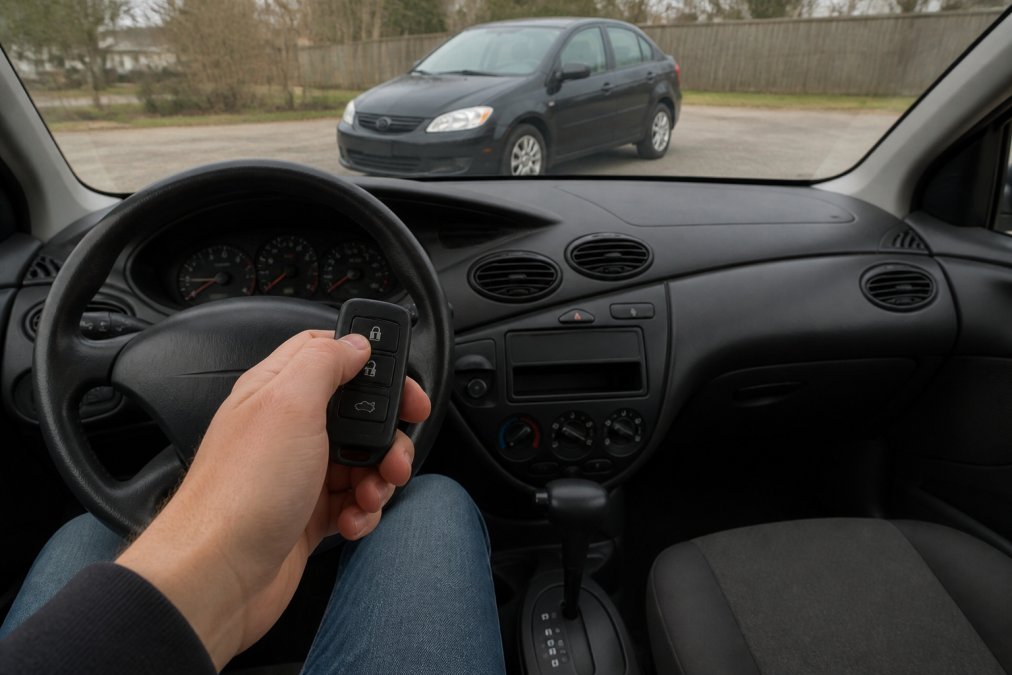
Now run the programming sequence. A typical onboard method looks like this:
Programming Instructions for 2008 Ford Focus Remote Fob
FORD REMOTE – THIS PROCEDURE RESETS ALL REMOTES FOR THE VEHICLE. ALL FUNCTIONING REMOTES WILL HAVE TO BE REPROGRAMMED DURING THE PROCEDURE
There are a few different procedures that will program your remotes depending on what vehicle that you have. You can find your exact procedure in your owners manual. If you do not have your owners manual you can try any of the procedures below until you find the one that works for your vehicles
Make sure that you don’t press the brake pedal at any time during or before the procedure.
Procedure A:
1.Close all doors, then open drivers door and press the Unlock button on driver’s door while it is open, insert key into ignition.
2.Turn ignition from OFF to RUN 8 times within 8 seconds, with the 8th time ending in RUN. Door locks will cycle to confirm programming mode. (if the door locks do not cycle, then it was done incorrectly. You must start over by removing key and beginning from step 1)
(Off is the position where you can remove your key, RUN is the position just shy of starting your car.)
3.Within 10 seconds press any button on the first keyless remote to be programmed. Door locks will cycle to confirm programming. If you only have one remote then skip to step 5.
4.Within 10 seconds, press any button on the second keyless remote. Door locks will cycle again to confirm programming. Repeat step 4. for all other remotes.
5.Turn ignition to OFF. Locks will again cycle to indicate end of programming mode.
*If this does not work try the procedure with the door closed.
Procedure B:
1. Fasten seatbelt and close all doors
2. Turn the ignition from OFF to RUN 4 times within 3 seconds.
3. Turn the ignition OFF. The system will chime to confirm programming mode.
4. Within 10 seconds, press and hold any button on first keyless remote. The system will chime once to confirm programming.
5. Within 10 seconds, press and hold any button on second keyless remote. System will chime once to confirm programming.
6. Turn ignition to RUN to exit programming mode.
Please Note: All steps should be performed in fairly rapid succession. If you never get the initial chime or door lock cycle, that means the vehicle has never entered programming mode. You should remove key from ignition, open and close the door and start over
OBD2 Key Programmer Tool: What It Does and When You Need One
An OBD2 key programmer tool connects to your car's diagnostic port and writes new key data to the computer. It's the same 16-pin port a mechanic uses to pull engine codes, and it's the only DIY-adjacent path that works when you have zero working keys.
What Actually Happens When You Program a Key
Under the dash, the process is a handshake, not a copy. The tool requests security access from the immobilizer module, the module returns a random challenge, the tool answers with a calculated response, and only then does the module open a "key slot" for writing. Each vehicle has a fixed number of slots, commonly 4 to 8. A lost key still occupies its slot until it's explicitly erased.
The Three Classes of Tool
- Remote-only pairing tools. Cheap, and they only handle the radio-frequency side of a keyless entry remote. They cannot touch the immobilizer chip. Useless for a no-key situation.
- Immobilizer programmers. These read and write the transponder/immobilizer data. Many are brand-licensed and locked to specific makes. This is the tier most DIY-capable owners actually need.
- Dealer-level / OEM tools. Full module access, including slot erasure, PIN reading, and all-keys-lost procedures. Some manufacturers restrict these to franchised dealers by policy, not by hardware.
VIN-Based Verification Before You Buy
A VIN-based programming tool is the safer buy. It decodes your 17-character VIN to confirm the exact make, model, model year, and immobilizer generation before writing any data. Two vehicles that look identical on the lot can use different immobilizer generations across a mid-year change, and writing the wrong generation's data can brick the module.
Before buying or renting any tool, confirm three things:
- The tool's coverage list includes your exact model year, not just your model.
- The tool supports the operation you need, add key, erase key, or all-keys-lost.
- The tool's license covers your brand. Some brands require a paid subscription or a dealer-issued PIN that a consumer cannot obtain.
NHTSA VIN decoder to confirm your vehicle's exact build
Key Fob Replacement Without the Original: Your Options
Losing the original fob doesn't mean a dead end. You have three realistic paths.
Car Key Fob Programming Cost: DIY vs. Professional Service
Here's the honest answer on car key fob programming cost: it depends on your vehicle, the key type, and who does the work.
Option | What You Pay For | Best For | Main Drawback |
|---|---|---|---|
DIY onboard | Fob only | Older cars, one working key | Won't work with no keys |
Dealership | Part, labor, diagnostic fee | Warranty and OEM parts | Highest cost, longer wait |
Mobile locksmith | On-site service call | All-keys-lost, urgent jobs | Availability varies |
Common Mistakes and Troubleshooting Tips
Most failed attempts come down to a handful of errors. But before you assume the programming failed, you have to answer one question first: is the fob dead, or is it de-programmed? They look identical from the driver's seat, and they have completely different fixes.
Diagnostic Flow: Battery or Programming?
Work through this in order. Stop at the first "yes."
- Does the fob's LED light up when you press a button? If there's no LED at all, the battery is the prime suspect. Replace it and retest.
- Does the fob work only when you're standing right next to the car? That's a weak battery or a failing fob, not a programming problem. Programming failures are all-or-nothing, not distance-dependent.
- Does the fob lock and unlock the doors but the engine won't start? The remote side is fine; the immobilizer chip is the problem. That's a programming or chip issue, not a battery issue.
- Does the fob do nothing at all, even with a fresh battery? Now you're looking at a genuine programming or pairing failure.
The Other Common Failures
- Wrong fob frequency. Remotes broadcast on set frequencies, commonly 315 MHz or 433 MHz in North America. A mismatched fob will never pair, no matter how many times you cycle the ignition.
- Skipped ignition timing. The sequence has to run within the time window. On many vehicles the window is 10 seconds for the full cycle.
- Signal interference. Garage door openers, Wi-Fi routers, phone chargers, and even nearby LED drivers can block the pairing signal. Move the fob away from the charger and retry.
- Not checking compatibility. Always confirm your model year against a compatibility database before buying a fob. A fob that fits the keyway may still carry the wrong chip.
- Full key slot table. If the vehicle's memory already holds the maximum number of keys, an "add key" procedure will fail silently. You need an erase step first.
When to Call a Professional Locksmith
Call a professional when you've lost all keys, drive a push-to-start vehicle, or see a security light you can't clear. These jobs need diagnostic equipment most owners don't have.
Frequently Asked Questions
Can I program a key fob myself without any tools?
It depends on your vehicle. Many older cars with basic transponder keys allow onboard programming using a sequence of ignition cycles and button presses, no tools required. Newer vehicles with push-to-start and advanced immobilizer systems usually need a diagnostic tool or professional service. Check your owner's manual first; it will state whether onboard programming is supported for your specific make and model.
Will AutoZone or other auto parts stores program a key fob for me?
Most auto parts stores, including AutoZone, do not program key fobs. They sell replacement fobs and batteries, and some can read diagnostic codes, but they lack the OEM-level tools needed to pair a fob to your vehicle's immobilizer. For programming, you will need a dealership, an automotive locksmith, or a capable DIY tool. Call ahead to confirm what a specific store offers before driving there.
How do I program a replacement key fob for my specific vehicle?
Start by identifying your key type: traditional transponder, remote head key, or smart proximity fob. Check the owner's manual for an onboard programming procedure. If none exists, you will need an OBD2 key programmer tool or a professional service. Vehicle-specific compatibility databases and VIN verification help match the right fob and procedure. For push-to-start vehicles, assume professional programming is required unless you own a capable scan tool.
When is it necessary to call a professional automotive locksmith?
Call a professional when you have lost all keys, when your vehicle uses a push-to-start immobilizer system, or when onboard programming fails repeatedly. A locksmith with OEM-level tools can cut and program a new fob on-site, often faster and cheaper than a dealership. If your security light stays on after a DIY attempt, stop and get professional diagnostics to avoid locking the system further.