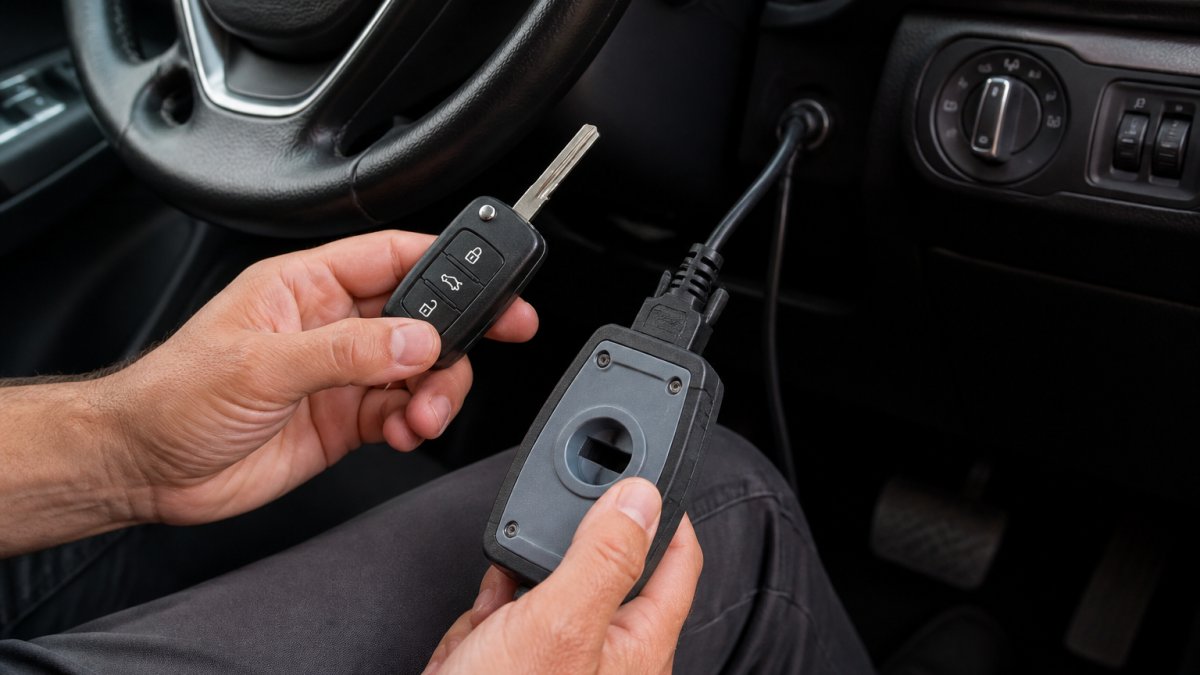
 how-to
Fastest Way to Replace Car Keys: 2026 Guide
Table of Contents
- How to Replace Lost Car Keys Without a Spare
- Mobile Automotive Locksmith Services vs. Dealership
- What Affects Car Key Fob Programming Cost
- Key Fob Battery vs. Key Replacement: Diagnose First
- Insurance and Warranty Coverage for Lost Keys
- Emergency Roadside Assistance and Towing Options
- Security Risks of Lost Keys and What to Do Next
- Frequently Asked Questions
Last Updated: September 29, 2026
How to Replace Lost Car Keys Without a Spare
Losing your only set of keys feels like a disaster. But the fastest way to replace car keys usually takes one afternoon, not one week. The key is knowing which path fits your car and your budget.
So here's the exact process, start to finish.
Step 1: Confirm Your Proof of Ownership and VIN
Proof of ownership is the document that proves the vehicle is yours. Without it, no legitimate provider can cut or program a key for you, this protects you and the provider from vehicle theft.
Gather these before you call anyone:
- Your vehicle registration or title
- A photo ID matching the name on the registration
- Your VIN, found on the driver's side dashboard or the door jamb sticker
Step 2: Choose Your Replacement Path
Once you have your documents, you have three routes, each trading speed against cost.
| Path | Typical Speed | Best For |
|---|---|---|
| Mobile automotive locksmith | Same day, often within hours | Lost keys, no spare, emergency lockout |
| Dealership service department | Same day to several days | Newer vehicles, warranty work, complex modules |
| Mail-in module repair | A few days | Immobilizer or BCM faults, not key loss |
Mobile Automotive Locksmith Services vs. Dealership
A mobile locksmith wins on speed for most lost-key situations; a dealership wins when your car needs manufacturer-specific software or warranty work. Four variables decide it: key type, vehicle age and make, whether you have a working key, and urgency.
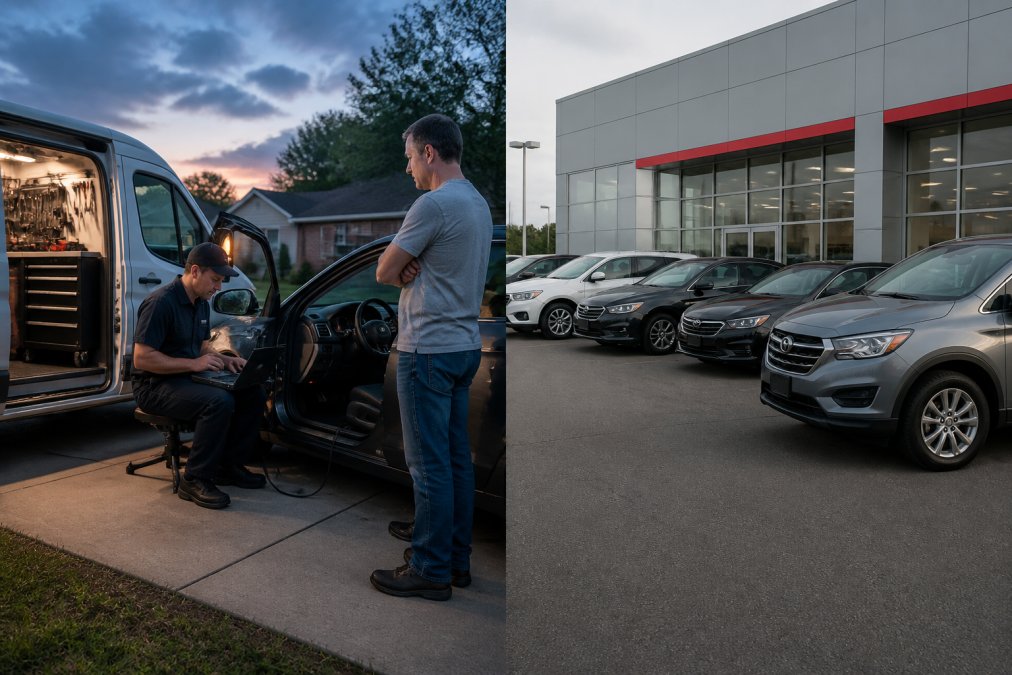
The Four Variables That Decide It
1. Key type. A basic cut key blade is simplest. A transponder key needs programming; a smart key or push-button fob needs programming plus a secure handshake with the immobilizer. The more complex the key, the more likely the dealer has the software edge.
Speed: What to Realistically Expect
- Mobile locksmith, standard transponder key, working key present: often under an hour on site.
- Mobile locksmith, all keys lost, common vehicle: typically one to three hours, depending on module access.
- Dealership, key in stock: same-day with an appointment, but bays book up.
- Dealership, key must be ordered: several business days, sometimes longer for older or rare models.
Mobile service compresses the timeline: no tow, no queue, and no parts order for common key types.
Cost: What Drives the Difference
Mobile locksmith pricing is usually a single service call covering cutting, programming, and travel. Dealership pricing splits parts and labor.
When a Mobile Locksmith Is the Fastest Option
Mobile automotive locksmith services bring the whole job to your driveway, office, or roadside, no towing, no service queue.
They're the best fit when:
- You lost your only key and have no spare
- You're locked out and need non-destructive entry
- Your car uses a standard transponder key or common key fob
- You need weekend or evening service
- You want a single quote that covers the whole job
When the Dealership Makes More Sense
The dealership is the right call in a few specific cases:
- Your vehicle is brand new and under warranty
- The key needs a security code pulled from the manufacturer
- Your immobilizer system or ECU has a fault, not just a missing key
- You want the work documented for a lease or warranty claim
- Your key must be ordered because it isn't stocked locally
The Step Most Drivers Skip
Before committing to either path, ask: "Can you program a new key on site, or does the vehicle need to be towed?" That distinction determines your total time and cost more than any other factor.
What Affects Car Key Fob Programming Cost
Car key fob programming cost depends on the key type, the vehicle, and where you get the work done, there's no single price.
The biggest factors are:
- Key type: a basic key blade costs far less than a smart key with push-button start
- Chip technology: chip keys and transponder keys need key programming, which takes tools and time
- Vehicle make and model: luxury and newer models often need dealer-level software
- Number of keys: a duplicate key made alongside an existing one is cheaper than an all-keys-lost job
- Module condition: a bad immobilizer system or ECU adds diagnostic time
Key Fob Battery vs. Key Replacement: Diagnose First
Before spending money on a new key, check the fob battery. A dead battery mimics a dead key and is the cheapest fix here.
Here's how to tell them apart:
- Fob battery is dying: the key works sometimes, range shrinks, or you must press harder
- Fob battery is dead: no response at all, but the physical key blade still starts the car
- Key is truly lost or broken: the blade is gone, or the car won't recognize any key
Insurance and Warranty Coverage for Lost Keys
Most drivers never check whether their policy covers a lost key, a five-minute call before paying out of pocket can save hundreds. The catch is knowing what to ask and where to look.
Where Lost-Key Coverage Actually Hides
Coverage rarely appears as a line item called "lost keys." It's usually buried inside one of these:
- Auto insurance, comprehensive coverage: Typically covers theft, vandalism, and weather damage (What is covered by collision and comprehensive auto insurance?). Some insurers extend it to key replacement, but many do not. You have to ask.
- Auto insurance, roadside assistance add-on: The most common source. Many roadside programs include lockout service; a smaller number include key replacement or reimbursement up to a cap.
- Extended warranty / vehicle service contract: Some plans cover key fob replacement as a listed component; others exclude keys entirely. Read the exclusions page, not the summary.
- New-car warranty: Almost never covers a lost key. It may cover a failed immobilizer module or a defective fob under the bumper-to-bumper term.
- Credit card benefits: Certain premium cards include roadside dispatch or lockout reimbursement. Check your card's benefits guide, not the marketing page.
The Exact Questions to Ask
When you call your insurer or warranty administrator, don't ask "do you cover lost keys?", that invites a wrong yes-or-no. Ask these instead:
- "Does my policy include lockout or key replacement coverage?"
- "Is it reimbursement or direct payment to the provider?"
- "What is the per-incident cap, and does it reset annually?"
- "Do I need to use a network provider, or can I choose my own locksmith?"
- "What documentation do you need, receipt, VIN, police report?"
How Reimbursement Usually Works
Typically you pay the locksmith or dealer up front, then submit a claim with your receipt and proof of loss. Reimbursement arrives as a check or account credit, often within two to four weeks. Direct-pay arrangements exist but are less common for mobile locksmith work.
When It's Not Worth Claiming
A key replacement claim can affect your policy at renewal in some states. If your out-of-pocket cost is modest and your deductible is high, paying directly may be cheaper over time, run the math before you file.
The Gap Most Guides Skip
Almost every article says "check your insurance" but never explains what coverage is called, what to ask, or why claims get denied, the difference between a call that saves money and one that wastes it.
Emergency Roadside Assistance and Towing Options
Roadside assistance can help, but it depends on what you actually need. Many programs unlock doors. Fewer can cut and program a new key on the spot.
Know the difference:
- Lockout only: roadside assistance or a locksmith can open the door
- Lost key: you need key cutting and key programming, not just entry
- Immobilizer fault: you may need towing to a shop with diagnostic tools
Security Risks of Lost Keys and What to Do Next
A lost key isn't just an inconvenience. If someone finds it near your car, they may know exactly which vehicle it opens.
Take these steps right away:
- Report it to your insurer if you suspect theft risk
- Reprogram or replace the key so the old one no longer works
- Erase lost keys from the vehicle's computer when possible
- Change your routine if the key had your address attached
Frequently Asked Questions
How quickly can I get a replacement car key?
A mobile automotive locksmith can often cut and program a replacement key on-site, depending on your vehicle's make and model. Dealerships typically require an appointment and may keep your car for a day or more. The fastest route is usually a mobile locksmith with OEM-level tools who can verify your proof of ownership and VIN on the spot.
Is it cheaper to go to a locksmith or a dealership for a key replacement?
Pricing for car key fob programming cost depends on the key type (transponder, smart key, or remote head key), whether you need a key blade cut, and your vehicle's immobilizer system. Call for a quote before committing, since costs vary by make and model.
Can I replace my car key myself?
You can replace the key fob battery yourself, which is often the real problem when a fob stops working. Replacing the entire key is different: transponder keys, smart keys, and remote head keys require programming to your vehicle's immobilizer system and ECU. Without OEM-level tools and a security code, DIY programming usually fails. A mobile locksmith can do it on-site in one visit.
What information do I need to provide to get a new car key?
You will need proof of ownership, such as your vehicle registration or title, plus a valid photo ID. The technician also needs your VIN, which is visible on the driver's-side dashboard or door jamb. Having these ready speeds up the process and lets the locksmith confirm you are authorized to get a key cut and programmed for that specific vehicle.