 blog
Are Aftermarket Key Fobs Worth It?
Last Updated: November 5, 2026
Quick Summary
Aftermarket key fobs are worth it when they cost less and you can verify the match before buying. Check the OEM part number, FCC ID, frequency, chip family, and button layout against your vehicle, and compare total installed cost including programming.
- Aftermarket fobs are generally as reliable as OEM keys, or slightly worse in durability.
- Match the OEM part number, FCC ID, frequency, chip type, and button count before ordering.
- Compare total installed price, including cutting, programming, and failed-attempt costs, not just the fob price.
- Confirm the warranty and return terms in writing, especially who covers a failed programming attempt.
- Keep your old fob as a backup until the new one has proven itself.
Table of Contents
- What an Aftermarket Key Fob Actually Is
- OEM vs. Aftermarket Key Fob: The Real Differences
- Aftermarket Key Fob Compatibility by Vehicle
- Aftermarket Key Fob Programming Cost and Total Installed Price
- Reliability, Durability, and Failed-Programming Risk
- Aftermarket Key Fob Warranty and Return Policy
- Booking Your Next Key Fob Replacement in East Tennessee
- Frequently Asked Questions
What an Aftermarket Key Fob Actually Is
An aftermarket key fob is a replacement remote made by a company other than the vehicle's original manufacturer. Like the factory unit, these aftermarket key fobs usually handle locking, unlocking, and sometimes triggering the alarm or remote start. The difference lies in who built it and how closely it matches the original specifications.
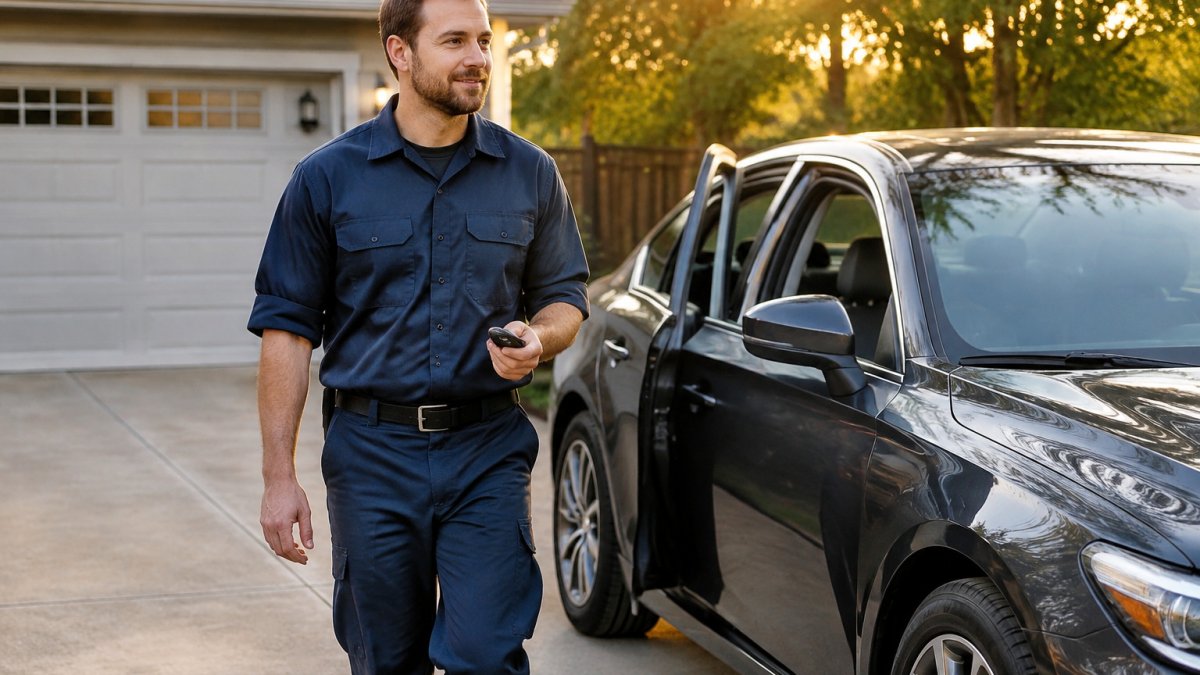
Many drivers encounter aftermarket fobs when they lose a key or when a factory fob fails. Replacement fobs from the dealer can cost $150 to $500 or more, according to Kelley Blue Book's guide to car key replacement, which is why buyers often look at cheaper alternatives first.
Aftermarket key fob refers to any remote, transponder, or keyless entry unit produced outside the automaker's supply chain. Quality, compatibility, and warranty coverage vary widely from one seller to the next.
Dealerkeys, a mobile automotive locksmith serving East Tennessee, provides key and fob programming services. The right choice between factory and aftermarket key fobs depends on the vehicle, the key's function, and how the replacement will be programmed.
OEM vs. Aftermarket Key Fob: The Real Differences
The main practical gap between OEM (original equipment manufacturer) and aftermarket fobs is consistency. OEM units are built to the exact specifications the automaker used for that model year. Aftermarket units may match closely, but they can differ in signal frequency, chip type, or button durability.
Auto Locksmiths' overview of aftermarket keys states that aftermarket keys are generally as reliable as OEM keys, or slightly worse in durability. That is a useful baseline, but it is a general statement, not a measured comparison for every model.
Here is how the two compare on the criteria that usually matter:
| Factor | OEM Fob | Aftermarket Fob |
|---|---|---|
| Price | Highest | Usually lower |
| Fit and compatibility | Guaranteed for the model | Varies by seller and model |
| Durability | Consistent | Can be slightly lower |
| Warranty | Typically from the automaker or dealer | Depends on the seller |
| Programming | Usually required | Usually required |
The lower price is the main reason to consider an aftermarket fob. The trade-off is that you carry more of the risk if the unit does not match your car. If the fob itself is failing rather than lost, mail-in repair for fob and key modules can be a lower-cost option than a full replacement.
Aftermarket Key Fob Compatibility by Vehicle
Compatibility is the question that decides most aftermarket purchases, and it is where generic listings fail buyers. A fob that works on one model year can fail on the next, even from the same manufacturer. The reliable way to confirm fit is to match five identifiers before you order, not to trust the listing title.
1. Part number. Every factory fob carries an OEM part number stamped on the back of the case or printed inside the battery compartment. That number, not the vehicle name, is what a seller's cross-reference should match. If a listing does not show a cross-reference to your OEM part number, treat it as unverified.
2. FCC ID. The FCC ID printed on the fob identifies the radio transmitter type the unit was certified under. Two fobs can look identical and carry different FCC IDs because the internal frequency or modulation changed between model years. Match the FCC ID on your old fob to the listing before buying.
3. Frequency. Most North American keyless entry systems operate at 315 MHz or 433 MHz. The frequency is usually printed on the fob or listed in the seller's specifications. A 315 MHz fob will not pair with a vehicle expecting 433 MHz, even if the buttons and blade match.
4. Chip type. Transponder chips fall into families such as Philips Crypto, Texas Instruments, and Megamos, and the immobilizer will only recognize the family your vehicle was built for. The chip type is not visible from the outside, so ask the seller to confirm it against your vehicle's year, make, model, and trim.
5. Button count and blade style. Count the buttons on your original fob (lock, unlock, trunk, panic, remote start) and confirm the replacement has the same layout. Check whether your vehicle uses a fixed blade, a flip blade, or a proximity fob with no blade at all, and confirm the emergency key style if one is included.
Trim level matters as much as model year. A base trim and a top trim of the same model can use different body control modules and different fob frequencies. When you call a seller or a locksmith, give them the VIN, not just the model name, so the part can be verified against the vehicle's build data.
A technician checking a replacement fob against the vehicle's door controls is the standard verification step. Before ordering, confirm the make, model, model year, trim, OEM part number, FCC ID, frequency, chip family, and button layout. Those details matter more than the brand name on the package.
Programming is also vehicle-specific. Some models accept a new fob through a simple on-board sequence, while others need diagnostic equipment. Our guide on how to program a car key fob explains how to tell which method your vehicle uses.
Watch out: a seller who cannot tell you the FCC ID or chip family for a listing is selling an unverified part, and a failed pairing usually means you own the return shipping.
Aftermarket Key Fob Programming Cost and Total Installed Price
The sticker price of a fob is only part of the bill. Programming, labor, key cutting, shipping, and any mobile service fee all add to the final number. A low-priced fob can end up costing more than a higher-priced unit once extra visits and fees are added. The useful comparison is total installed cost, which means the fob plus cutting plus programming plus any failed-attempt cost.
Here is how the three common paths break down on the components that drive the final price:
| Cost component | Online aftermarket seller | Local locksmith | Dealership |
|---|---|---|---|
| Fob price | Lowest, often $15 to $80 | Bundled into service price | Highest, often $150 to $500 or more |
| Key cutting | Not included; you arrange it | Usually included | Included |
| Programming | Not included; you arrange it | Included in service call | Included in labor |
| Mobile or trip fee | Shipping both ways | Varies by distance and time | Trip to dealer, no mobile fee |
| Failed-attempt cost | You pay return shipping and a second programming visit | Usually covered by the locksmith's warranty | Usually covered by the dealer |
| Total installed price | Lowest only if programming succeeds on the first try | Middle, predictable | Highest, predictable |
The online path looks cheapest on the listing page, but it pushes the two riskiest steps, cutting and programming, onto you. If the fob does not program, you have paid for shipping both ways and possibly a second locksmith or dealer visit, and the savings can disappear.
The locksmith path bundles the fob, cutting, and programming into one price, and a mobile locksmith eliminates the trip. The dealership path is the most predictable and the most expensive, but it carries the strongest warranty and the least risk of a compatibility mismatch.
We recommend comparing the total installed price rather than the part price alone. Ask each provider for a quote that includes the fob, cutting, programming, mobile fee, and the cost of a second visit if the first attempt fails. Pricing depends on the key type, the vehicle, and whether you need a mobile visit. Dealerkeys can give you a quote for your specific vehicle, and you can see how car key programming service pricing breaks down by key type before you book.
Repair can sometimes beat replacement. For a fob that is failing but not dead, whether fob repair services are worth the cost is a question worth answering before you buy a new unit.
Watch out: a quote that lists only the fob price is not a total installed price, and the missing cutting and programming charges are where the budget usually breaks.
Reliability, Durability, and Failed-Programming Risk
A common source of trouble with replacement fobs is the programming step. If a replacement is not paired correctly to the immobilizer or body control module, the car may not start.
Durability depends on build quality, battery contacts, and button materials. Cheap buttons can wear through sooner, and a weak circuit board can fail after months of use. Ask the seller how the unit was tested before shipping.
Watch out: a fob that programs successfully on day one can still fail after a few weeks if the internal chip or battery contact was poorly made. Keep the old fob as a backup until the new one has proven itself.
Aftermarket Key Fob Warranty and Return Policy
Warranty terms are where aftermarket buyers often get caught. Some sellers offer a short window for defects. Others exclude programming problems entirely, which leaves you responsible for a failed pairing even when the fob itself is defective.
Before you buy, read the return policy and confirm who handles returns if the fob will not program. Get the terms in writing. A seller who will not state them plainly is a warning sign.
Many buyers also overlook the cost of a return. Shipping both ways, a second programming visit, and lost time can erase the savings that made the aftermarket option attractive in the first place.
Booking Your Next Key Fob Replacement in East Tennessee
If you are locked out or need a new fob, a mobile service often costs less overall than a dealership trip, especially after dark or on weekends. Dealerkeys offers mobile dispatch seven days a week and can cut and program keys on-site. For modules that need repair rather than replacement, the company also offers a mail-in repair service for BCM, ECU, and immobilizer modules.
Call for dispatch and describe your vehicle, your key type, and whether you are locked out or replacing a working fob. Use the Dealerkeys Rockwood, TN locksmith page to see the local service area and contact details.
Frequently Asked Questions
Do aftermarket key fobs work well?
Aftermarket key fobs can work well when they match your vehicle's make, model, year, and frequency, and when they are programmed correctly. Reliability varies by seller and product quality. Aftermarket units are generally considered as reliable as OEM fobs or slightly less durable. Buyers should check compatibility details, confirm the seller's testing standards, and review warranty terms before purchasing. Dealerkeys can be contacted about fob compatibility and programming for your specific vehicle, and current pricing is available by calling or through the company's website.
Will an aftermarket key fob work with my car?
It depends on the vehicle's make, model, model year, and the fob's chip and frequency. Before buying, match the part number or FCC ID printed on your existing fob, and confirm the replacement lists your exact vehicle. Some vehicles need a specific transponder chip or immobilizer-compatible unit, and some require dealer-level software to pair. A locksmith with the right diagnostic tools can verify compatibility before programming, which helps avoid paying for a fob that cannot be paired to your car.
Can a locksmith program an aftermarket key fob?
Many automotive locksmiths can program aftermarket key fobs on-site, including through mobile dispatch, provided they have the right diagnostic equipment for your make and model. Programming ability varies by vehicle, and some newer systems restrict key pairing to dealer software. Ask whether the service includes testing the fob and confirming all buttons work, and review the warranty terms before booking. Dealerkeys offers mobile key and fob programming across East Tennessee, and you can call for dispatch to confirm your vehicle is supported.
Can I return an aftermarket key fob if it does not work?
Return eligibility depends on the seller. Many online sellers accept returns of unopened or unprogrammed fobs, but they may charge restocking fees or refuse returns once a fob has been programmed. Before ordering, read the return policy, confirm whether programming is covered, and ask what happens if the fob fails to pair. Buying from a seller that offers a written warranty and clear return terms reduces the risk of paying for a fob that cannot be used.